 Перейти к содержимому








Intrusion Detection Systems (IDS) monitor network traffic and system activities to detect suspicious behavior and alert administrators, while Intrusion Prevention Systems (IPS) actively block detected threats in real-time. IDS provides passive monitoring and alerts, whereas IPS provides active protection by intercepting and stopping malicious activity before reaching target systems.
These security technologies emerged in the 1980s when organizations needed ways to identify unauthorized system access. Early systems relied on simple log analysis and pattern matching. Modern IDS/IPS solutions combine signature-based detection, behavioral analysis, and artificial intelligence to identify both known and unknown threats.
This guide covers intrusion detection and prevention systems following NIST Special Publication 800-94 guidelines. You’ll learn the differences between IDS and IPS, understand deployment types, discover detection methods, and master configuration techniques for effective network security architecture.
Содержание
- What Is an Intrusion Detection System?
- What Is an Intrusion Prevention System?
- IDS vs IPS: Key Differences
- Types of IDS and IPS Systems
- Detection Methods
- Deploying IDS and IPS
- Configuration Guide
- Performance Tuning
- Real-World Implementation
- Best Practices for 2026
- Integration with Security Tools
- Troubleshooting Common Issues
- AI and Machine Learning
- Future Trends
- Часто задаваемые вопросы
- Conclusion
What Is an Intrusion Detection System?
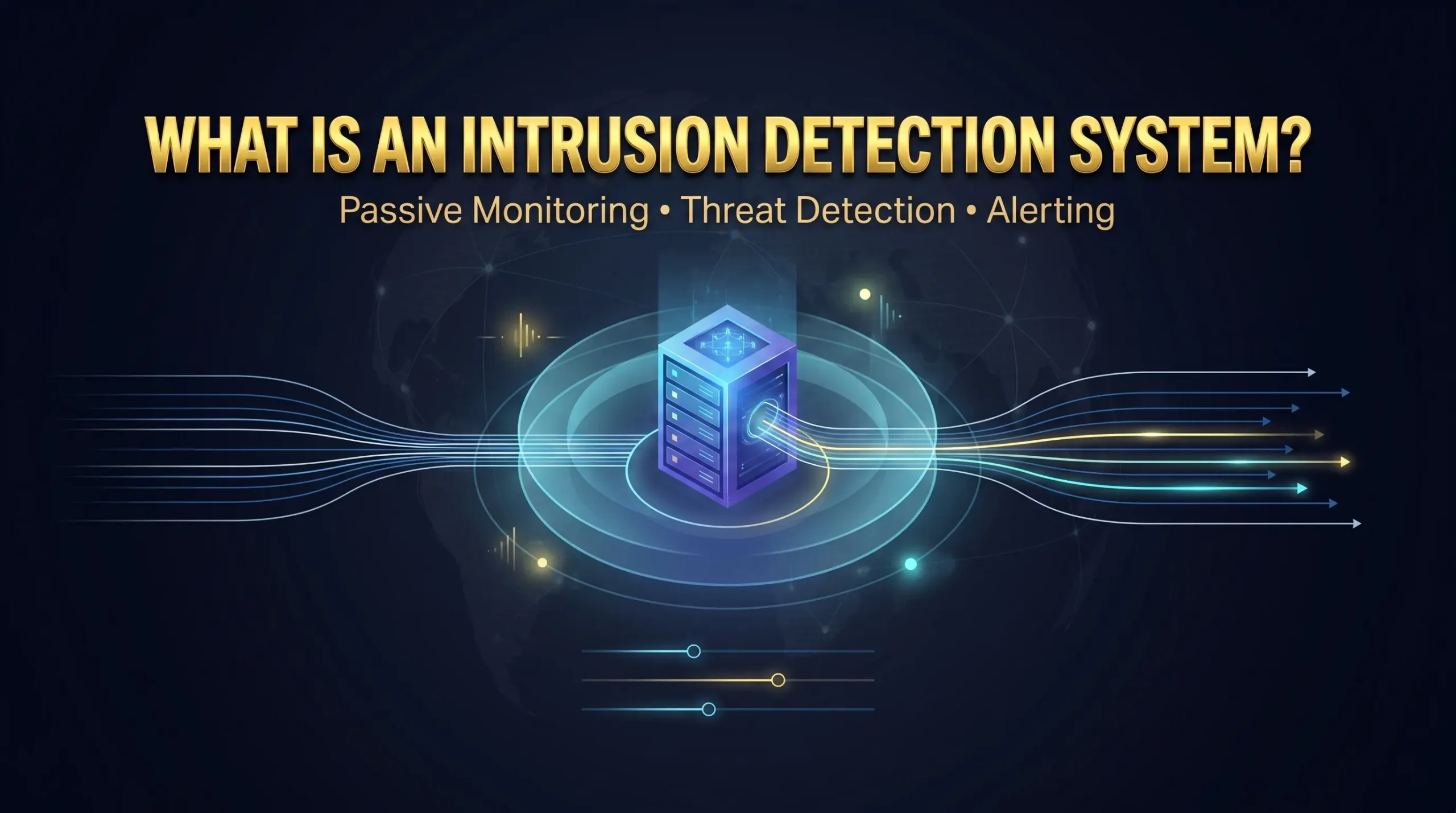
An Intrusion Detection System monitors network traffic, system activities, and log files to identify suspicious patterns, policy violations, or signs of malicious behavior. IDS operates passively by analyzing data flows without interfering with network traffic, generating alerts when potential security threats are detected for security team investigation.
IDS functions as the monitoring layer in your security architecture, providing visibility into attacks, policy violations, and abnormal activities. The system compares observed behavior against known attack signatures and established baselines.
Modern IDS systems serve multiple functions. They monitor network health and performance, support compliance requirements through logging, provide forensic data for incident investigation, identify security policy violations, and detect insider threats that bypass perimeter defenses.
Security teams review IDS alerts to distinguish genuine threats from false positives and start appropriate incident response procedures.

What Is an Intrusion Prevention System?
An Intrusion Prevention System monitors network traffic, detects malicious activities, and automatically takes action to block threats in real-time. Unlike IDS which only alerts, IPS sits inline with network traffic flow and can drop malicious packets, reset connections, block IP addresses, and modify firewall rules to stop attacks before they reach target systems.
IPS represents the evolution from passive detection to active prevention. The inline deployment model enables IPS prevention capabilities. All network traffic passes through the IPS device, allowing real-time inspection and immediate action.
IPS integrates closely with network firewalls for layered security. Firewalls control network access based on IP addresses, ports, and protocols, while IPS performs deep packet inspection to detect attacks firewalls miss.
Primary IPS actions include dropping malicious packets, rejecting packets with reset messages, blocking source IP addresses temporarily or permanently, rate limiting suspicious traffic, modifying firewall rules dynamically, and triggering alerts while taking automated action.
IDS vs IPS: Key Differences
The core difference between IDS and IPS lies in their approach to threat response. IDS detects and alerts while IPS detects and prevents.
IDS deploys out-of-band, receiving traffic copies through SPAN ports or network TAPs. This passive approach means zero impact on network performance. IPS deploys inline, positioned directly in the traffic path. All traffic flows through IPS devices, enabling active prevention but potentially introducing latency.
IDS generates alerts and logs events for human analysis. Security teams review alerts, investigate threats, and manually start responses. IPS takes automated action based on configured policies, immediately blocking malicious traffic without human intervention.
Deploy IDS when you need threat visibility without risk of disrupting legitimate traffic. Deploy IPS when you need automatic threat prevention for critical network segments. Many organizations use both in a layered approach, with IPS protecting critical chokepoints and IDS providing broader network visibility.

Types of IDS and IPS Systems
Network-Based IDS (NIDS)
Network-Based Intrusion Detection Systems monitor network traffic across entire network segments by analyzing data packets, detecting suspicious patterns, port scans, malware, and attack attempts targeting any system on the monitored network.
NIDS sensors connect through SPAN ports or network TAPs, receiving copies of all traffic. Sensors operate in promiscuous mode, capturing packets regardless of destination.
Popular NIDS solutions include Snort (open-source signature-based NIDS), Suricata (multi-threaded with GPU acceleration), and Zeek (network analysis framework). Commercial options include Cisco Firepower and Palo Alto Networks Threat Prevention.
Host-Based IDS (HIDS)
Host-Based Intrusion Detection Systems are software agents installed on individual hosts that monitor system activities, file integrity, log files, and process execution to detect suspicious behavior on specific devices.
HIDS agents run directly on operating systems, providing deep visibility into host-level activities. Agents monitor system calls, file changes, registry modifications, user accounts, and application behaviors.
Common HIDS solutions include OSSEC (open-source supporting multiple platforms), Wazuh (enhanced OSSEC with improved management), and Tripwire (file integrity monitoring).
Organizations achieve comprehensive security by combining NIDS and HIDS in hybrid deployments, following SANS security best practices alongside intrusion prevention systems.

Detection Methods
Signature-Based Detection
Signature-based detection identifies threats by comparing network traffic or system activity against a database of known attack signatures—predefined patterns representing specific malware, exploits, or attack techniques.
This approach works like antivirus software, maintaining a database of known threat patterns. When IDS/IPS observes traffic matching a signature, it triggers an alert or prevention action.
Advantages include high accuracy for known threats, fast processing, clear threat identification, and proven effectiveness. Limitations include inability to detect zero-day attacks, requirement for constant signature updates, and vulnerability to evasion techniques.
Anomaly-Based Detection
Anomaly-based detection identifies threats by establishing baseline patterns of normal network or system behavior, then flagging significant deviations from these baselines as potential security incidents.
The system first learns normal behavior during a baseline establishment phase, observing traffic patterns, user behaviors, and application activities. After establishing baselines, the system continuously compares real-time activity against norms.
Advantages include detecting zero-day attacks, identifying insider threats, adapting to environment changes, and requiring no signature updates. Limitations include higher false positive rates, requirement for environment-specific tuning, and learning period before effective detection.
Modern systems combine both methods for comprehensive coverage, using signature-based detection for known threats and anomaly-based detection for unknown threat discovery.
Deploying IDS and IPS
Strategic deployment determines effectiveness. Proper placement, configuration, and integration maximize threat detection while minimizing false positives.
Inline vs Passive Deployment
Passive IDS deployment connects via network TAPs or SPAN ports with zero performance impact. IDS can fail without affecting network operations. However, IDS cannot prevent attacks in real-time.
Inline IPS deployment positions sensors directly in traffic paths, enabling real-time prevention. IPS can drop packets, reset connections, and block sources. The tradeoff includes potential latency and single point of failure concerns.
Organizations must decide IPS behavior if the system fails. Fail-open allows traffic to pass, prioritizing availability. Fail-closed blocks all traffic, prioritizing security. Most choose fail-open for production networks with high availability configurations.
Sensor Placement
Place sensors at internet gateways for external threat detection, at DMZ boundaries protecting public-facing servers, at internal segment boundaries for lateral movement detection, and before critical assets like database servers.
Organizations should integrate deployment with network segmentation strategies for defense-in-depth architectures.

Configuration Guide
Pre-Deployment Planning
Define security objectives identifying specific threats to detect. Conduct network assessment documenting topology and traffic flows. Choose between IDS, IPS, or hybrid deployment. Select network-based, host-based, or both.
Installation and Setup
For network-based deployment, install appliances or virtual machines at designated points. Configure network interfaces for management and monitoring. Connect sensors via TAP, SPAN, or inline. For host-based, deploy agent software to endpoints and configure communication with management servers.
Set up centralized management console with strong authentication. Configure NTP time synchronization, enable secure protocols, and disable default accounts.
Detection Rule Configuration
Enable vendor-provided signatures starting with critical severity rules. Run in monitoring mode initially, collecting 1-2 weeks of baseline data. Tune detection rules by disabling irrelevant signatures, creating exception rules for known-good traffic, and adjusting sensitivity thresholds.
Configure alert severity levels: critical for immediate action, high for one-hour investigation, medium for 24-hour review, and low for routine analysis.
Integration and Testing
Forward all alerts to SIEM for correlation. Coordinate with firewalls for automated blocking. Connect with threat intelligence platforms for IOC updates. Enable SOAR integration for automated response.
Generate test attacks in controlled environments. Verify detection accuracy and alert generation. Test prevention actions for IPS. Validate performance under load.
Organizations should ensure tight integration with their Security Operations Center for effective monitoring.
Performance Tuning
Reducing False Positives
Disable signatures completely irrelevant to your environment. Adjust rule sensitivity for noisy signatures. Create exception rules for known-good traffic. Whitelist trusted IP addresses.
Analyze alert patterns weekly. Investigate high-volume alerts. Update whitelists as environments change. Track tuning effectiveness measuring false positive rates before and after changes.
Managing False Negatives
Keep signatures updated through automatic daily downloads. Enable multiple detection methods combining signature and anomaly detection. Conduct regular penetration testing. Subscribe to threat intelligence feeds.
Real-World Implementation
Small Business Deployment
Organizations with 25-100 employees and budgets of $5,000-$15,000 benefit from streamlined approaches. Deploy a single NIDS/NIPS appliance at the internet gateway for perimeter protection. Open-source Suricata with Security Onion offers cost-effective capabilities. Commercial alternatives include Sophos or Fortinet UTM devices with integrated IPS features.
Install HIDS agents like OSSEC or Wazuh on critical servers protecting key infrastructure. Forward logs to cloud-based SIEM for centralized monitoring without on-premises infrastructure. Configure automatic signature updates reducing maintenance burden. Focus on protecting critical assets rather than comprehensive coverage.
Mid-Sized Enterprise Strategy
Organizations supporting 500-2,000 employees across multiple locations with $50,000-$150,000 budgets need distributed approaches. Deploy NIPS at each location perimeter providing distributed protection. Install NIDS for internal segment monitoring detecting lateral movement. Implement HIDS on critical servers and sensitive endpoints. Use centralized management console coordinating all sensors.
Position perimeter IPS inline at internet gateways protecting all locations. Deploy internal IDS monitoring traffic between segments using SPAN ports or TAPs. Install IPS protecting DMZ before public-facing web servers and applications. Deploy HIDS on database servers, domain controllers, and financial systems. Configure centralized logging forwarding all alerts to SIEM.
Enable both signature-based and anomaly-based detection providing comprehensive coverage. Implement custom signatures addressing organization-specific threats. Configure automated response actions for high-confidence threats while requiring analyst approval for medium-confidence detections. Plan for high availability at critical points ensuring continuous protection.
Best Practices for 2026
Start with detection before prevention. Deploy IDS initially to understand traffic patterns. Build rule libraries tuned for your environment. Gradually transition to IPS after demonstrating low false positive rates.
Combine NIDS for network-wide visibility with HIDS for endpoint protection. Deploy both IDS and IPS. Integrate with firewalls and SIEM. This defense-in-depth approach following Zero Trust security principles provides comprehensive protection.
Enable automatic signature updates with daily downloads. Monitor alert queues daily. Track key performance metrics. Review high-priority alerts within defined SLAs.
Define clear response procedures documenting workflows. Assign roles and responsibilities. Establish communication channels. Create escalation paths.
Meet compliance management frameworks requirements. PCI DSS requires IDS monitoring at perimeters. HIPAA mandates intrusion detection for ePHI. SOC 2 requires continuous monitoring. GDPR Article 32 requires security monitoring for personal data.
Integration with Security Tools
SIEM integration provides centralized event correlation combining IDS/IPS alerts with firewall logs and endpoint data. Configure syslog forwarding sending all alerts to SIEM.
Firewall coordination enables dynamic rule creation where IPS automatically creates firewall rules blocking detected threats. Threat intelligence integration imports feeds providing malicious IPs, domains, and file hashes.
SOAR platforms automate response to IDS/IPS detections. Create playbooks triggering when IDS/IPS detects threats. Automate investigation steps. Coordinate response actions across multiple security tools.
Organizations benefit from implementing comprehensive security monitoring strategies alongside IDS/IPS.

Troubleshooting Common Issues
High False Positive Rate: Review most frequently triggered rules identifying noisy signatures. Tune noisy rules adjusting thresholds or disabling if irrelevant. Create exception rules allowing known-good traffic patterns. Whitelist trusted IP addresses for legitimate scanning tools and backup systems. Conduct weekly false positive reviews maintaining low noise levels. Track alert volumes before and after tuning measuring effectiveness.
Performance Issues: Monitor sensor resource usage checking CPU, memory, and disk utilization. Upgrade hardware providing more CPU cores and memory capacity. Optimize rule processing order placing frequently matched rules first. Implement traffic filtering pre-filtering non-suspicious traffic. Add additional sensors distributing load through load balancing. Disable unnecessary features reducing processing overhead. Consider hardware acceleration for cryptographic operations improving throughput.
Missed Detections: Review detection rules checking enabled signatures and coverage. Update signatures immediately downloading latest releases from vendors. Enable additional detection methods combining signature and anomaly detection approaches. Add missing coverage areas deploying sensors at network blind spots. Review and enable previously disabled rules reconsidering relevance. Conduct penetration testing identifying detection gaps requiring attention.
Connectivity Issues: Verify network connectivity checking physical connections and configurations. Review SPAN port settings ensuring proper traffic mirroring. Check firewall rules allowing management traffic and log forwarding. Validate credentials ensuring proper authentication. Reconfigure network connections, fixing SPAN or TAP settings. Update firewall rules permitting required traffic flows.
Maintenance Tasks: Review critical alerts daily prioritizing based on severity. Analyze alert trends weekly identifying patterns requiring investigation. Update signatures and software monthly applying security patches. Conduct comprehensive system audits quarterly assessing effectiveness and coverage. Generate compliance reports meeting regulatory requirements. Train security teams regularly on new threats and detection techniques.
AI and Machine Learning
Artificial intelligence transforms detection from reactive to predictive security. Supervised learning trains models on labeled datasets. Unsupervised learning identifies patterns through clustering. Deep learning uses neural networks for complex pattern recognition.
User and Entity Behavior Analytics (UEBA) detect threats through behavior analysis. Establish baselines for normal user activities. Detect deviations indicating account compromise. Identify insider threats showing abnormal access patterns.
AI enables automated threat hunting, intelligent alert prioritization, and self-tuning systems with dynamic threshold adjustment.
Future Trends
Cloud computing requires new approaches adapted for dynamic infrastructure. AWS Network Firewall, Azure Firewall, and Google Cloud Armor provide managed solutions. Cloud-native capabilities include auto-scaling, API-driven deployment, and container-aware detection.
AI-driven autonomous detection enables predictive security anticipating attacks before they occur. Automated response implements self-healing networks isolating compromised systems.
Organizations adopting cloud security platforms need cloud-native IDS/IPS protecting modern infrastructure.
Часто задаваемые вопросы
What is the main difference between IDS and IPS?
IDS passively monitors traffic and generates alerts for investigation. IPS actively blocks malicious traffic in real-time by sitting inline with network flow. IDS requires manual response while IPS provides automated protection.
Can I use both IDS and IPS together?
Yes, using both is recommended. Deploy IPS at critical chokepoints for automated protection while using IDS for comprehensive network visibility. This combination provides both prevention and detection capabilities.
How often should signatures be updated?
Update signatures at least weekly, with critical updates applied within 24-48 hours. Many organizations enable automatic daily updates while testing major releases in staging first.
What is NIDS vs HIDS?
NIDS monitors network traffic across segments detecting network attacks. HIDS monitors individual hosts detecting system-level activities like file changes that NIDS cannot observe.
Do IDS/IPS slow down networks?
IPS deployed inline can introduce 1-10 milliseconds latency. IDS deployed passively has zero performance impact. Properly sized systems minimize latency.
How do I reduce false positives?
Tune rules for your environment, create whitelists for known-good traffic, disable irrelevant signatures, and adjust sensitivity thresholds. Conduct weekly reviews identifying tuning needs.
What is signature-based vs anomaly-based detection?
Signature-based matches traffic against known attack patterns with high accuracy but misses zero-days. Anomaly-based establishes behavior baselines and flags deviations, detecting unknown threats but generating more false positives.
Can IDS/IPS detect encrypted traffic?
IDS/IPS cannot inspect encrypted content without decryption. They analyze metadata, connection patterns, and traffic volumes. Organizations can implement SSL/TLS decryption for content inspection.
What are the best open-source tools?
Popular options include Snort (signature-based NIDS), Suricata (multi-threaded IDS/IPS), Zeek (network analysis), OSSEC (HIDS), and Security Onion (complete platform).
Should IPS be fail-open or fail-closed?
Fail-open allows traffic if IPS fails, prioritizing availability. Fail-closed blocks traffic if IPS fails, prioritizing security. Most choose fail-open for production networks with high availability.
Conclusion
Intrusion Detection and Prevention Systems provide critical visibility and protection in network security. Understanding IDS versus IPS differences, selecting appropriate detection methods, and implementing proper deployment creates effective threat detection and prevention.
Start with planning defining security objectives and network architecture. Choose the right combination of network-based and host-based solutions. Deploy IDS first to establish baselines before enabling IPS blocking.
Follow best practices including current signatures, continuous tuning, SIEM integration, and regular testing. Remember IDS/IPS work best combined with firewalls, endpoint protection, and security awareness training.
The threat landscape evolves constantly with attackers employing artificial intelligence and exploiting cloud environments. Modern systems use machine learning for enhanced detection, support cloud deployments, and provide automated response. Your security depends on continuous monitoring, rapid detection, and effective prevention—exactly what properly configured IDS/IPS systems deliver.